
Finding hope: Bright future after life-changing surgery in Germany

Five months ago, Sarah Wills was slowly dying. She was in excruciating pain and she vomited every time she drank or ate.
The 20-year-old from Palmerston North was exhausted physically and mentally, struggling to even get out of bed.
“I go to sleep wondering if I will wake up,” a desperate Wills told Stuff in March. “I don’t know how much time I have.”
But after seven years of seeking relief, Wills has finally received life-saving surgery in Germany.
“I finally feel like I have some sort of future ahead even though there is still a long way to go.
“I have bought tickets to Justin Bieber to celebrate my 21st birthday and I am so excited.
“It is amazing to be able to make plans and know that I won't be a burden because I end up vomiting, or running out of energy and paying for it later.”
With her condition poorly understood, Wills spent seven years attempting to have her health issues taken seriously.
After visiting eight doctors who ignored her pleas, Wills began her own research in an effort to find a diagnosis.
Her health was significantly deteriorating while she suffered from hypermobile Ehlers Danlos Syndrome (EDS), a genetic connective tissue disorder caused by defects in the collagen protein. This had caused her significant gastrointestinal problems.
She also had vascular illnesses – nutcracker syndrome, May-Thurner syndrome and median arcuate ligament syndrome (MALS) – which caused compressions to tissue and arteries that provide blood to her organs.
“Everyone I went to would make me feel crazy.
“They would tell me I just had a ‘fear of eating’ and dismiss it as a psychological problem, rather than a physical one.”
She searched worldwide for health professionals who specialised in vascular compressions and found Dr Wilhelm Sandmann.
He is a vascular surgeon located in Germany who has been performing life-changing operations with positive results.
After a video consultation, Sandmann told Wills she needed to fly to his clinic urgently.
She underwent extra testing, including an expensive special ultrasound by paediatrician Professor Thomas Scholbach.
Once complete, a picture of Wills’ health was clear.
]
Sandmann could perform surgery that would fix all the compressions at the same time – the safest and most cost-effective way of giving Wills back her quality of life.
But the trip would cost Wills and her mother, Barbara, about $60,000.
“I don’t care about the money,” said Barbara. “You do whatever it takes for your child to get her life back.
“I would have sold the house if I had to [but] I’m just so lucky it didn’t come to that.”
Wills set up a Givealittle page and managed to raise more than $30,000, and with additional help from savings, family and fundraising activities, Wills and her mum set off for Germany in May.
Scholbach performed a specialised compression ultrasound, and was able to show Wills the compressions and the effects they had on her blood flow.
“It was so validating after being gaslit by so many doctors in the past.
“I can’t tell you how much of a relief it was to know that everything I had experienced was true and I might finally have a solution.”
A week later Sandmann shared the final scan results and the discovery of several additional compressions that Wills was not aware of.
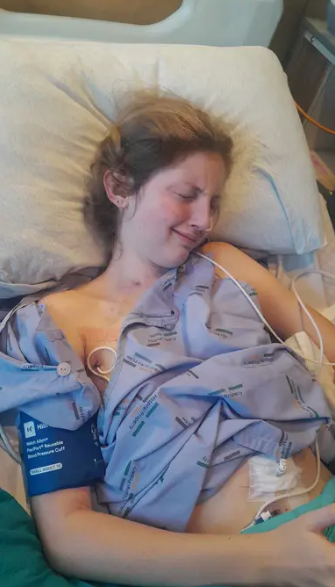
On June 9, she was admitted to Clinic Bel Etage in Düsseldorf for the seven-hour operation.
Eight weeks on from surgery, Wills is gradually healing from the discomfort of the operation and is able to eat and drink without throwing up.
It is the beginning of a long recovery, which will take about a year, as her compromised digestive system adjusts to swallowing small amounts of food.
“After a year and a half of having no food going through them, vomiting everything, they have to learn to work properly,” Barbara said.
Wills may not ever have a fully-functioning intestinal tract but, she said, “it is better than vomiting, when I just try to drink water”.
Her body would remain delicate until stents that were inserted to ease the compressions healed. But for the first time she is making plans and looking forward to a future.
Wills wants to find work next year but is unsure of what she is going to do.
Before her experience with the New Zealand health system, Wills dreamed of becoming a nurse.
Now, she said, she would not work in the same system that disregarded her concerns and refused to look further into a diagnosis.
“I am angry at my doctors here at home, I am frustrated at the medical system which told me I didn’t have a problem even though I have heard of people who have died.”
She said New Zealand doctors needed to do better.
“This is very real. If it were not for Professor Scholbach and Dr Sandmann I would have died.
“They have given back my future and I will always be so grateful to them and everyone who supported me.”


Comments